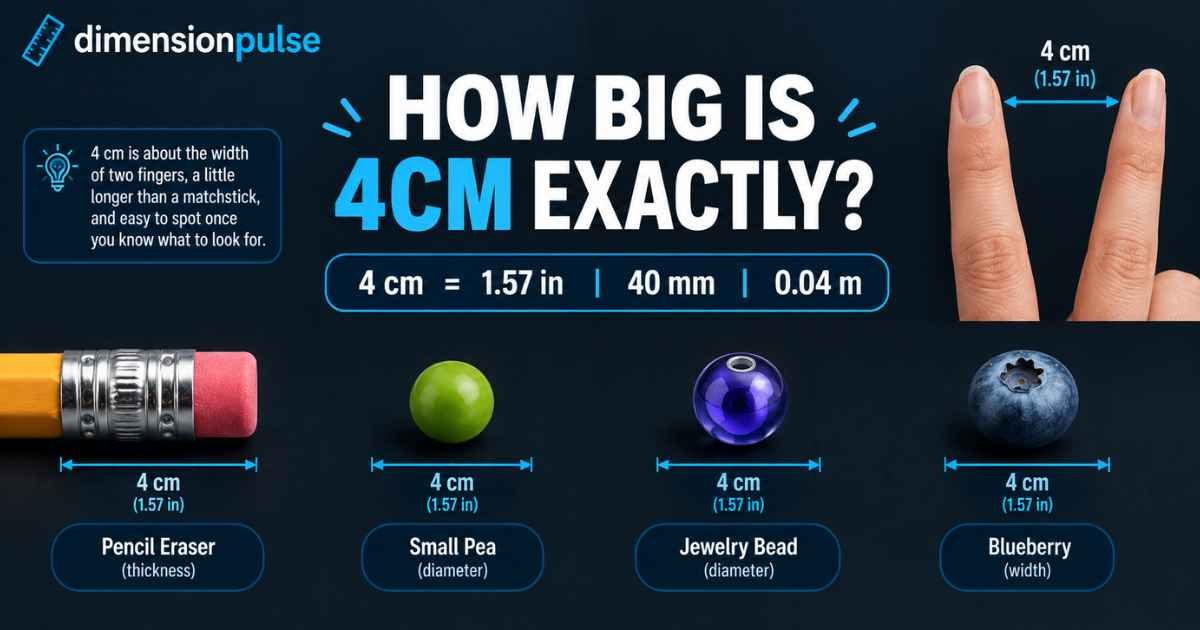
Four centimeters is one of those measurements that sounds precise on paper but is hard to picture in real life. In simple terms, 4 cm equals 1.57 inches or 40 millimeters roughly the space between the tip of your thumb and the first knuckle. It’s small enough to sit comfortably on a fingertip, yet large enough to notice at a glance. Once you tie this number to a handful of everyday objects, you’ll never need to reach for a ruler again just to picture “how big” something really is.
How Big Is 4cm Exactly?
To put it plainly, 4 cm sits right between “tiny” and “small.” It’s shorter than the length of a standard AA battery and slightly wider than a large paperclip. If you’ve ever held a bottle cap or a small cookie in your hand, you’ve already held something close to 4 cm without realizing it.
For a numeric reference: 4 cm = 1.57 inches = 40 mm = 0.04 meters. It’s a size that shows up constantly in stationery, snacks, small hardware, and packaging which is exactly why it’s worth having a mental picture of it.
What Does 4cm Look Like?
Picture two fingers pressed side by side that gap is almost exactly 4 cm. Another easy way to visualize it: take a standard matchstick and imagine it slightly longer than half its length. That’s your 4 cm.
It’s also close to the width of a large button or the diameter of a small coin. Unlike a full inch (2.54 cm) or two full inches (5.08 cm), 4 cm sits in a size range that’s genuinely easy to overlook unless you’re specifically measuring for it which is why visual comparisons work better than numbers alone.
Measurement Without a Ruler
You don’t always need a measuring tool nearby. Here are three quick, reliable ways to estimate 4 cm using what’s already around you:
Using your hand:
Place your index and middle fingers flat against each other. The combined width is very close to 4 cm a handy trick when you’re out shopping or working on a quick DIY project.
Using fingers:
Measure from the tip of your finger down to the first knuckle. For most adults, this distance falls somewhere between 3 and 4 cm, making it a fast personal reference point.
Using common objects:
Everyday items like a bottle cap, a garlic clove, or a small eraser are almost always close to 4 cm. Keep one of these in mind, and you’ll have an instant visual ruler wherever you go.
Quick Comparison Table
| Item Name | Approx. Size |
| Bottle Cap Diameter | ~1.5 in |
| Garlic Clove Length | ~1.5 in |
| Standard Pink School Eraser | ~1.6 in |
| Walnut | ~1.5 in |
| European Hornet Body Length | ~1.4 in |
| Matchbox Width | ~1.5 in |
| Small Cookie Diameter | ~1.6 in |
| Large Coin Width | ~1.5 in |
| Lip Balm Stick Height | ~1.6 in |
| Alamansi Fruit | ~1.5 in |
| Key Head Length | ~1.5 in |
| Small Candle Diameter | ~1.6 in |
| Marker Cap Length | ~1.5 in |
| Sticky Note Width | ~1.6 in |
| Toy Car Width | ~1.6 in |
| USB Flash Drive Width | ~1.5 in |
| Chalk Piece Length | ~1.6 in |
17 Real-Life Examples of 4 cm (Simple & Daily Use)
Bottle Cap Diameter
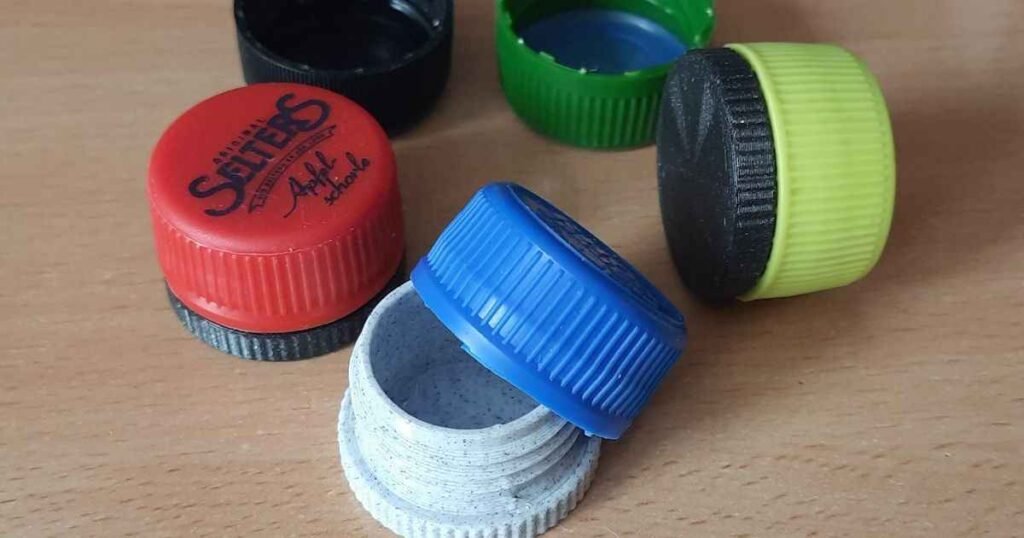
A standard plastic bottle cap from water or soda bottles is one of the easiest ways to picture 4 cm. Most caps measure close to 1.5 inches across, making them a familiar, grab-and-check reference.
Caps are built to be gripped comfortably, so their size naturally lands in that “not too small, not too big” range. Hold one in your hand and you’ll immediately feel how close it sits to 4 cm.
Because bottle caps are found in nearly every kitchen, they’re one of the most practical everyday comparisons for this measurement no searching required.
Read More Visit: 15 Common Things That Are 14 Inches Long
Garlic Clove Length
A single clove of garlic, on average, runs close to 4 cm in length. Sizes vary slightly depending on the bulb, but most cloves land in this general range.
Its tapered, slightly curved shape makes it easy to rest on a fingertip, giving an instant visual sense of scale. Cooks often handle several cloves at once, which makes this comparison second nature in the kitchen.
Next to a full inch or two, a garlic clove is noticeably shorter a simple, no-tools-needed way to picture 4 cm.
Standard Pink School Eraser
The classic pink eraser found in pencil cases is a familiar 4 cm reference for anyone who’s sat through school. Its width typically measures close to 1.6 inches.
Because it’s designed to be held between two fingers while erasing, its compact size naturally aligns with this measurement. Most students handle one daily without ever thinking about its exact dimensions.
This makes it one of the most relatable comparisons, especially for anyone picturing sizes for school or office use.
Walnut

An average walnut, still in its shell, measures close to 4 cm across. Its rounded, slightly uneven shape makes it a natural, tactile way to picture this size.
Walnuts are common in kitchens and pantries, so there’s a good chance one is within reach right now. Holding one in your palm gives an immediate, no-guesswork sense of scale.
Compared to smaller nuts like almonds or peanuts, a walnut sits clearly closer to the 4 cm mark.
European Hornet Body Length
Among insects, the European hornet is a notably large example, with adult body length reaching close to 4 cm. This makes it one of the larger flying insects people commonly encounter.
Its size is often what makes it stand out and cause concern, since it’s visibly larger than a typical wasp or bee. Knowing this comparison helps put its size into perspective without needing a photo for scale.
This is a useful example for anyone curious about insect sizes in everyday nature encounters.
Matchbox Width
A standard matchbox, the kind used for household matches, has a width close to 4 cm. It’s compact enough to fit in a pocket or drawer.
Its rectangular shape makes it an easy, consistent object to compare against, since matchboxes are manufactured to fairly standard dimensions. This reliability makes it a handy mental reference.
Compared to larger boxes or containers, a matchbox stays firmly in the small, pocket-sized range that matches 4 cm well.
Small Cookie Diameter

Bite-sized or homemade cookies often measure close to 4 cm across. These are noticeably smaller than standard bakery cookies, which can reach 4 inches or more.
Their round, flat shape makes them simple to compare visually, and their size is easy to picture something you could finish in one or two bites.
If you’re ever unsure how big 4 cm looks, a small cookie is one of the quickest food-based references available.
Large Coin Width
Several large coins, depending on the country, come close to 4 cm in width. While not every coin matches exactly, many fall near enough to serve as a solid comparison.
Coins are small, portable, and easy to hold up against other objects, which makes them a convenient reference almost anywhere. Their consistent, standardized size adds to their reliability.
Compared to smaller coins, larger denominations give a noticeably clearer sense of this measurement.
Lip Balm Stick Height
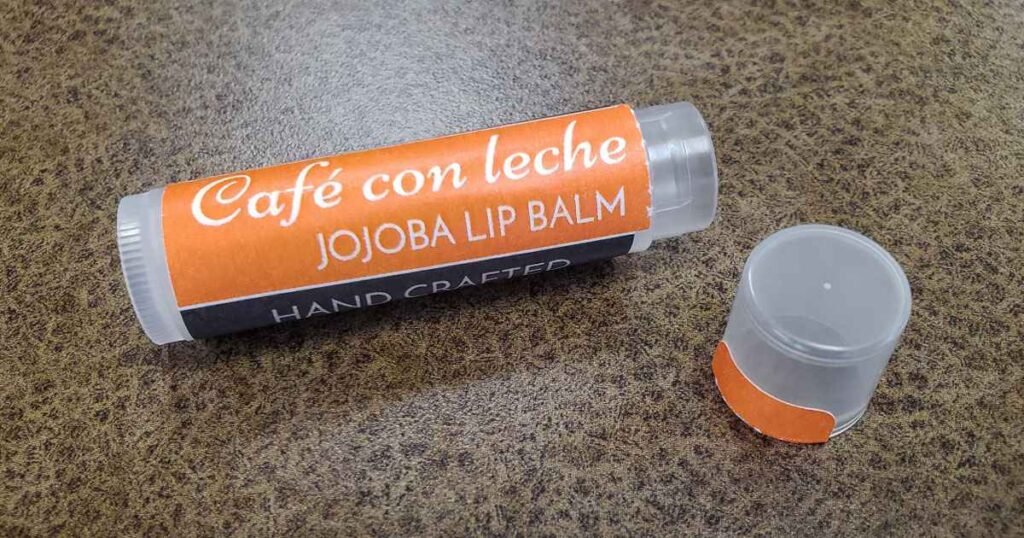
A typical lip balm tube, when closed, stands close to 4 cm tall. Its compact, pocket-friendly design makes it a common item people carry daily.
Because so many people use lip balm regularly, it’s an easy size to recall without needing to look anything up. Compared to items around 3 inches, it’s noticeably shorter.
This makes it a practical, always-on-hand reference for visualizing small measurements.
Alamansi Fruit
The alamansi, a small citrus fruit common in many households, typically measures close to 4 cm in diameter. Its round shape and consistent size make it a natural comparison.
Since it’s roughly the size that fits neatly in a child’s palm, it offers an intuitive, tactile way to picture this measurement. It’s especially useful for anyone familiar with cooking or baking with citrus.
Compared to a lime or small lemon, the alamansi is noticeably smaller, landing closer to the 4 cm mark.
Key Head Length
The head of a standard house key the part you grip while turning usually measures close to 4 cm. This section is deliberately sized for a comfortable, secure hold.
Since keys are handled multiple times a day, their head size becomes a subconscious reference point for many people without them even realizing it.
Compared to the full length of the key, which can reach 2–3 inches, the head alone lines up closely with 4 cm.
Small Candle Diameter

Small decorative or votive candles often have a diameter close to 4 cm. Their compact size makes them popular for short-term use or décor.
Their round, uniform shape makes them easy to compare visually against other round objects on this list, like coins or cookies.
Compared to larger pillar candles, which can reach 4 inches or more in width, these smaller candles stay clearly within the 4 cm range.
See Also: How Long Is 5 Inches? 15 Everyday Things That Are 5 Inches Long
Marker Cap Length
The cap of a standard marker whether for school or office use typically measures close to 4 cm in length. It’s designed to fully cover the tip while remaining easy to remove.
Held between two fingers, a marker cap gives an immediate, physical sense of this measurement, especially for students who handle markers daily.
This makes it one of the more practical, classroom-friendly comparisons on this list.
Sticky Note Width
A single sticky note, particularly the smaller square variety, often has a width close to 4 cm. These are common on desks, notebooks, and office boards.
Their thin, flat shape makes them easy to line up against other flat objects for comparison, and their small size makes them ideal for quick visual reference.
Because sticky notes are so widely used, this comparison works well for anyone picturing measurements in an office or study setting.
Toy Car Width

Mini toy cars, especially die-cast versions designed for small hands, often measure close to 4 cm in width. Their compact size makes them easy to store and carry.
Holding one, you can immediately sense how small and manageable 4 cm really is closer to a toy than to a full-sized object.
Compared to larger toy vehicles, these miniature versions stay firmly in the small-scale range that matches this measurement.
USB Flash Drive Width
A standard USB flash drive typically measures close to 4 cm in width. Despite their small size, these drives are built to hold significant amounts of data.
Their compact, portable design makes them a practical modern comparison most people have handled one recently without noting its exact dimensions.
Compared to longer objects like a pen, which often exceeds 5 inches, a USB drive is noticeably shorter and more compact.
Chalk Piece Length
A standard piece of classroom chalk, when new or lightly used, measures close to 4 cm in length. Its size is designed for a comfortable grip while writing.
Because chalk wears down with use, this measurement represents chalk in its more common, partially used state still a reliable visual reference.
Compared to longer writing tools like pencils or pens, chalk stands out as noticeably shorter, aligning well with this size.
Why Visual Comparisons Are Useful
Numbers alone rarely stick in memory the way images do. Telling someone something is “1.57 inches” gives them a figure, but comparing it to a bottle cap or a walnut gives them a picture they can recall instantly even weeks later. This is especially useful for anyone shopping online, following a recipe, working on a school project, or trying to judge whether an item will actually fit where it’s needed.
Visual comparisons also remove the need for tools. Instead of hunting for a ruler, you can glance at a nearby object a coin, an eraser, a sticky note and estimate size with reasonable accuracy. Over time, these mental reference points make everyday measuring faster and far more intuitive.
Quick Conversion Table (4cm in Different Units)
| Unit | Value |
| Centimeters | 4 cm |
| Millimeters | 40 mm |
| Meters | 0.04 m |
| Inches | 1.57 in |
| Feet | 0.131 ft |
Practical Uses for Measuring 4cm
Knowing this measurement comes in handy more often than people expect. It’s useful when:
- Shopping online, where product listings often give dimensions without images to scale
- Cooking or baking, when a recipe calls for ingredients cut to a specific size
- School and craft projects, where precise small measurements matter for accuracy
- Packing or storage, when checking if small items will fit into containers, drawers, or bags
- DIY and repair work, where small hardware or components need quick size checks
Once this measurement is tied to familiar objects, these everyday tasks become noticeably faster and require far less guesswork.
Conclusion
Four centimeters may seem like a small, easy-to-overlook measurement, but it shows up constantly in daily life from the cap on your water bottle to the eraser in your pencil case. By connecting it to familiar objects like a walnut, a matchbox, or a sticky note, this size becomes something you can picture instantly, without ever reaching for a ruler.
The more these comparisons become second nature, the easier it gets to estimate sizes accurately in everyday situations whether you’re shopping, cooking, crafting, or simply curious.

Ryan Carter is the founder of DimensionPulse, creating reliable guides on measurements, dimensions, unit conversions, and size comparisons. He helps readers understand everyday measurements through clear explanations, practical insights, and real-world examples.