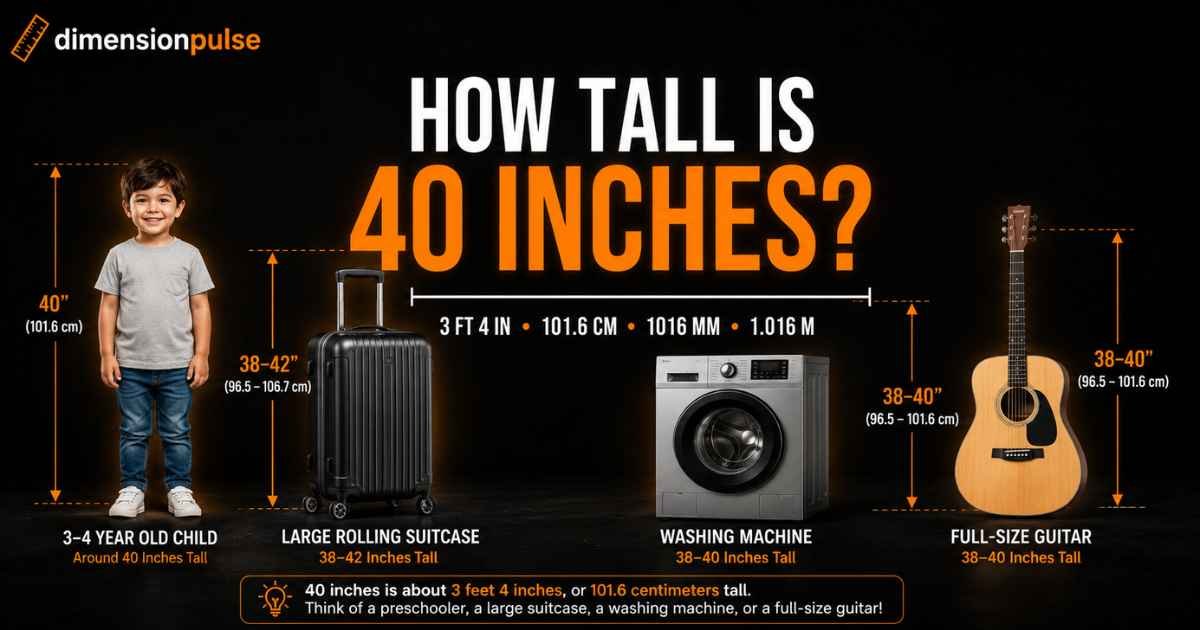
Trying to picture how tall 40 inches really is? You’re not alone. It’s one of those numbers that sounds simple on paper but becomes confusing the moment you try to imagine it in real life. Whether you’re shopping for furniture, checking a growth chart, or comparing it to a pet, this guide breaks it down with clear numbers, relatable examples, and easy visual tricks so you never have to guess again.
How Tall Is 40 Inches? The Simple Explanation
Let’s start with the basics. 40 inches works out to:
- 3 feet 4 inches
- 101.6 centimeters
- Just over 1 meter tall
In practical terms, that makes 40 inches taller than most toddlers, shorter than the average adult, and roughly in line with mid-sized furniture, large pets, or compact appliances. If you picture a typical adult standing somewhere between 5’6″ and 6 feet tall, this height reaches around the waist to lower-chest area for most people.
Is 40 Inches Considered Tall or Short?
There’s no single answer here; it completely depends on what you’re comparing it to. A height that feels tall for a toddler feels short for an adult, and downright average for a large piece of furniture. Breaking it down by category makes the picture much clearer and removes the guesswork from the question entirely.
For People
For a person, 40 inches is tall for a toddler, average for a young child around age four, and considerably short for anyone over the age of ten. Compared to a typical adult standing between 5’6″ and 6 feet, this height lands somewhere around the waist or lower chest, which is a useful mental anchor whenever you’re picturing this number next to a human being.
For Objects
Among household objects, 40 inches sits in the medium-height range. It’s tall enough to be a noticeable piece in a room like a bookshelf or a tall coffee table but never so tall that it overwhelms the space. This is exactly why so many manufacturers settle on this height for furniture that needs to stay both functional and visually balanced.
For Animals
In the animal world, 40 inches represents a genuinely large size. Big dog breeds, including Labradors and German Shepherds, can approach this height when measured to the top of the head. It’s also close to the shoulder height of a small pony. For pet owners, this makes animals one of the most intuitive real-world comparisons for the number.
What Does 40 Inches Look Like?
Picture a child around three or four years old standing next to you, or a large suitcase resting upright on its wheels. Both reach roughly the same point somewhere between your knee and your waist. This measurement is large enough to be immediately noticeable in a room, yet still small enough that it never feels oversized or out of place indoors.
40 Inches vs Other Nearby Measurements (Comparison Table)
Seeing 40 inches next to nearby numbers makes the scale click faster than reading the figure alone. A few inches up or down changes the comparison completely, whether it’s a shorter kitchen counter or a taller child. This table lines up the closest common measurements side by side for a quick, at-a-glance reference.
| Measurement | Feet & Inches | Centimeters | Common Reference |
| 36 Inches | 3 feet | 91.4 cm | Standard kitchen counter |
| 40 Inches | 3 feet 4 inches | 101.6 cm | 4-year-old child / large suitcase |
| 44 Inches | 3 feet 8 inches | 111.8 cm | Tall bar-height counter |
| 48 Inches | 4 feet | 121.9 cm | Small child, roughly age 8-9 |
Visualizing 40 Inches Without a Measuring Tape (No Ruler Needed)
Not everyone has a tape measure handy, and honestly, you don’t need one. A few simple mental shortcuts can get you remarkably close to an accurate estimate anywhere, anytime. Picture stacking three standard 12-inch rulers with a little extra left over, or simply think “just over three feet.” A kitchen counter minus about six inches, a preschooler standing upright, or a large suitcase resting on its wheels all land at roughly this same height once one of these images sticks, spotting 40 inches elsewhere becomes almost automatic.
Using Your Hand
An average adult hand span, from thumb tip to pinky tip, measures roughly 7 to 8 inches. Stack about five of these spans end to end, and you’ll land somewhere close to 40 inches. It’s not laboratory-precise, but for a quick gut check while shopping or measuring around the house, it works surprisingly well.
Using Fingers
If you want a slightly more granular method, one finger’s width is commonly used as a rough stand-in for one inch. Lining up roughly 40 finger-widths side by side gets you to the same 40-inch mark. It’s a slower method than the hand-span trick, but it can help fine-tune your estimate for smaller gaps.
Using Common Objects
Everyday items make for the fastest comparisons. A standard dining chair typically sits between 35 and 40 inches tall, and a small side table lands in a similar range. Standing one of these next to whatever you’re measuring gives you an instant visual reference without needing to pull out any tools at all.
40 Inches Conversion Chart
For quick reference, here’s how 40 inches breaks down across the most commonly used units of measurement, useful for anything from home improvement projects to school assignments.
| Unit | Converted Value |
| Feet | 3.33 ft |
| Centimeters | 101.6 cm |
| Millimeters | 1016 mm |
| Meters | 1.016 m |
| Yards | 1.11 yd |
12 Common Things That Are About 40 Inches Tall
Numbers stick best when they’re tied to something you can picture. Below are twelve everyday examples spanning people, furniture, pets, and appliances that all sit close to the 40-inch mark. Once a few of these connect in your mind, estimating this height anywhere else becomes almost automatic.
1. A 3–4 Year Old Child

One of the most reliable comparisons is a young child. Pediatric growth charts frequently list 40 inches as an approximate milestone for children between three and four years old, though genetics and individual growth patterns cause natural variation. If you’ve stood beside a preschooler recently, that height is about as close a real-world reference as you’ll find.
Also See >> How Long Is 5 Inches? 15 Everyday Things That Are 5 Inches Long
2. Kitchen Counter (Slightly Taller Reference)
Standard kitchen counters typically measure around 36 inches, making 40 inches roughly four inches taller than the surface you lean on daily. Picture that same counter with a small appliance or a stack of cookbooks sitting on top, and you’ve reached the height in question a comparison that’s especially handy when planning kitchen layouts or new furniture.
3. A Large Rolling Suitcase (Standing Upright)
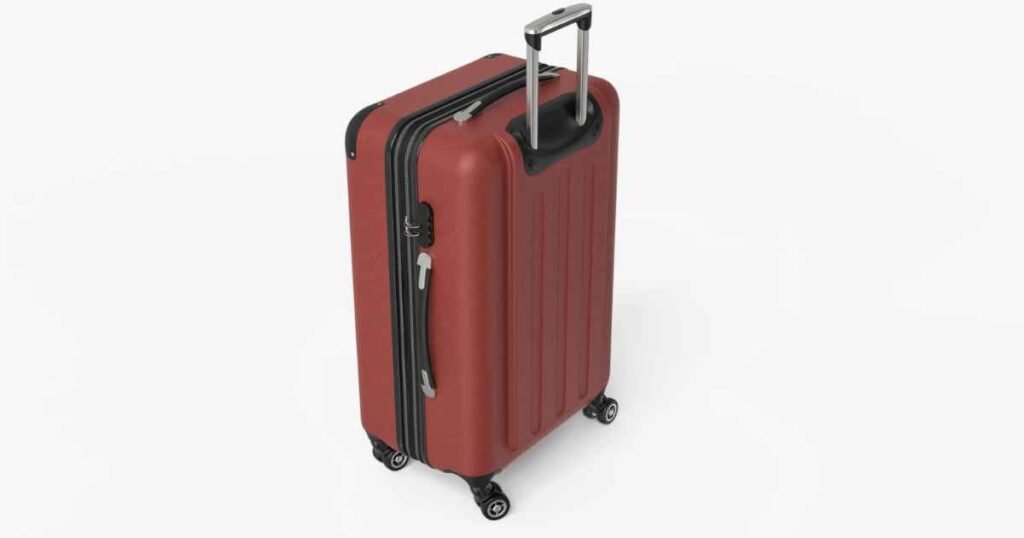
Most large checked suitcases stand between 38 and 42 inches tall when upright, wheels and handle housing included. Anyone who has wheeled one through an airport terminal already has a built-in sense of this height, since the top edge typically reaches somewhere between the waist and mid-thigh for an average adult traveler.
4. A Medium-Sized Dog Standing Height
Large dog breeds such as Labradors, Golden Retrievers, and German Shepherds often measure 24 to 30 inches at the shoulder, but factor in the head and upright posture, and many approach the 40-inch mark. For anyone who owns or has spent time around larger dogs, this is one of the most natural comparisons available.
5. A 40-Inch TV (Measured Diagonally)
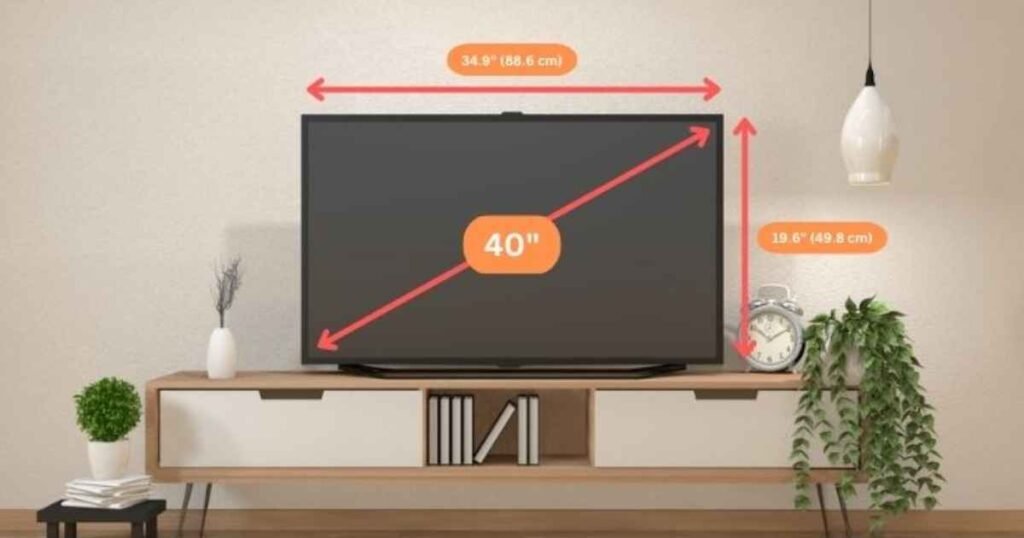
This one causes frequent confusion. TV sizes are measured diagonally across the screen, not vertically, so a 40-inch television actually stands only about 20 to 24 inches tall on its own. Once mounted on a stand or paired with a media console, though, the full vertical setup often climbs close to the true 40-inch height.
6. A Coffee Table Plus a Table Lamp
A typical coffee table measures around 16 to 18 inches tall on its own. Add a standard table lamp on top of it, and the combined height lands right around 40 inches. This stacked comparison is particularly useful for anyone visualizing furniture arrangements or planning a living room layout from scratch.
7. Office Desk Height

While standard seated desks usually sit lower, many adjustable and standing desks reach close to 40 inches at their tallest setting. Anyone who has used a standing desk already has a physical sense of this height, since it typically lands at a comfortable working level for most adult body proportions.
8. Dining Table Height
Most traditional dining tables measure closer to 30 inches, but taller bar-style or counter-height dining tables can reach up to 40 inches. These have become increasingly popular in modern homes, and standing beside one gives a clear, practical sense of how this height feels in a functional, everyday setting.
9. Washing Machine Height

Most front-loading and top-loading washing machines measure between 38 and 40 inches tall, making them one of the most common household references for this height. Since nearly every home has one, standing next to your own washer or dryer is an easy, instant way to confirm the measurement for yourself.
10. Full-Size Guitar
A standard full-size acoustic or electric guitar typically measures between 38 and 40 inches from headstock to base. For musicians or anyone who has picked one up, this makes for a surprisingly precise visual reference and a fun one, since it ties an abstract number to a familiar, tangible object.
11. A Small Bookshelf or Cabinet
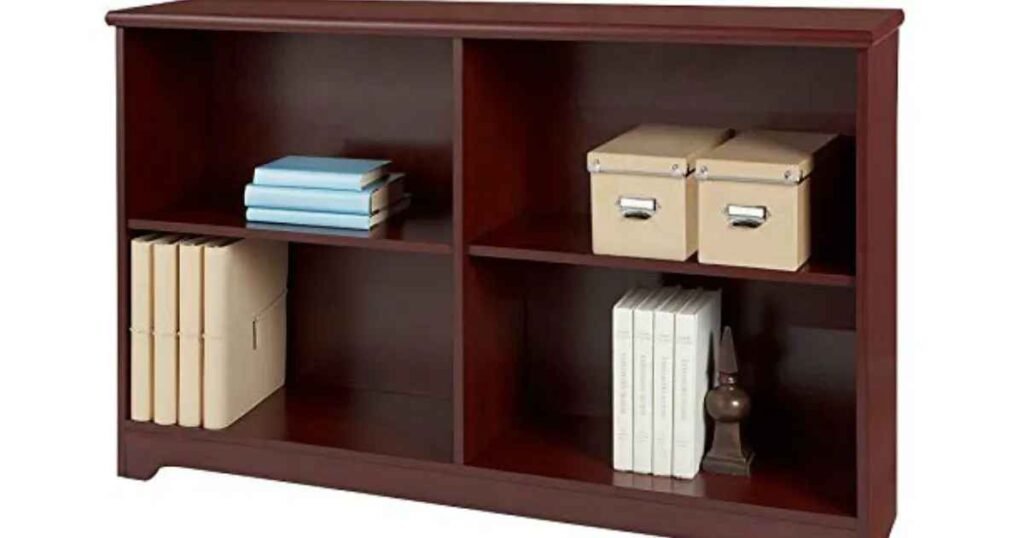
Compact bookshelves and storage cabinets, especially those designed for apartments or children’s bedrooms, are frequently built to around 40 inches tall. They usually hold three to four shelves and sit comfortably below adult eye level, making this a common and practical height choice across a wide range of furniture styles.
12. A Child’s Bicycle (Standing Upright)
Bicycles designed for children roughly four to six years old typically measure between 38 and 42 inches tall when parked upright, handlebars included. Anyone who has stored one in a garage or hallway already has a built-in sense of this height, making it a surprisingly relatable comparison for parents.
40 Inches in Different Countries/Standards
While inches remain the standard unit across the United States, most other countries rely on the metric system, listing this same height as 101.6 centimeters instead. In the US and UK, 40 inches shows up frequently in furniture and safety codes, bar-height counters, certain railing minimums, and children’s furniture guidelines. Elsewhere, the equivalent centimeter figure is used on packaging and product specs instead.
Why 40 Inches Is a Common Measurement
This height shows up constantly, and there are clear reasons behind it:
- It’s ergonomic for both children and adults
- It’s a safe, practical height for kids’ furniture and play equipment
- It fits comfortably in small spaces without overwhelming a room
- It aligns closely with common manufacturing standards
- It balances visibility with everyday accessibility
That combination of comfort, safety, and space-efficiency is exactly why 40 inches keeps turning up across so many product categories, including:
- Children’s furniture
- Storage solutions
- Pet-related equipment
- Household appliances
- Displays and stands
Common Misconceptions About 40 Inches
A few mix-ups come up again and again when people talk about this measurement. Clearing them up early makes every other comparison in this guide easier to trust and apply correctly, especially when you’re using this number to make an actual purchasing or planning decision at home.
“40 Inches Is the Same as 4 Feet”
This is one of the most common mix-ups. In reality, 40 inches equals 3 feet 4 inches, not a full 4 feet. That extra 8-inch gap can matter quite a bit when you’re measuring for furniture placement or checking whether something will actually fit through a doorway or into a designated space.
“40 Inches Is Small”
Whether this is true depends entirely on context. It’s genuinely small for an adult human, but it’s a substantial, noticeable size for furniture, appliances, and most household objects. Calling it “small” without specifying what you’re comparing it to is where most of the confusion around this number actually comes from.
“I Don’t Need to Measure, I Can Guess”
Guessing might work occasionally, but it frequently backfires when buying furniture or planning a room layout. A shelf that looks “about right” by eye can end up several inches off once it’s actually delivered. Taking sixty seconds to measure or using one of the visual tricks above saves real hassle later.
How to Measure 40 Inches Accurately at Home
If a tape measure isn’t within reach, a few reliable workarounds exist. Try stacking three standard 12-inch rulers plus a small book, measuring from the floor to your counter and adding roughly four inches, or comparing against a piece of furniture you already know the exact height of. Accuracy matters most in tight or awkward spaces.
When 40 Inches Is the Perfect Size
Certain situations call specifically for this height. It works well for child-accessible furniture, medium storage solutions, shelving kept below eye level, and portable appliances that shouldn’t dominate a room visually. In many of these cases, 40 inches strikes a genuine “just right” balance noticeable and useful, without ever feeling oversized or out of proportion.
Frequently Asked Questions About 40 Inches
How tall is 40 inches compared to a person?
It typically reaches around waist height on an average adult and closer to chest height on a young child, depending on their individual proportions and age.
Is 40 inches tall for a 4-year-old?
It’s very common and lands close to average for that age group, though individual growth naturally varies from child to child based on genetics and development.
How many centimeters is 40 inches?
Exactly 101.6 centimeters, which also equals 1016 millimeters or roughly 1.016 meters when converted into the metric system used across most of the world.
How can I measure 40 inches easily?
Use hand spans, finger widths, or compare against a known object like a dining chair or small table all reliable shortcuts when a tape measure isn’t handy.
Is 40 inches good for furniture height?
Yes, it’s a widely used and practical height for shelves, cabinets, and children’s furniture, since it balances visibility and accessibility without overwhelming most rooms.
Conclusion
Once you connect 40 inches to real, everyday objects, a young child, a suitcase, a washing machine, a small bookshelf, the number stops feeling abstract. You now have a full toolkit: quick conversions, visual comparisons, measuring tricks, and answers to the most common questions. The next time you spot “40 inches” on a label or a spec sheet, you’ll know exactly what it means.

Ryan Carter is the founder of DimensionPulse, creating reliable guides on measurements, dimensions, unit conversions, and size comparisons. He helps readers understand everyday measurements through clear explanations, practical insights, and real-world examples.