Imagine standing at one end of a calm street or a wide parking lot. There is a stretch of open space in front of you. It isn’t huge, but it certainly isn’t small either. That is the kind of distance we mean when we ask how long 50 feet is.
Most people don’t have trouble with numbers. Their trouble is picturing them. Saying “50 feet” doesn’t create a clear image in your mind until you connect it with something real that you have seen before.
That is exactly what this guide does. You will learn how long 50 feet is, how it feels in real space, and which everyday objects match it, so you can recognize this distance instantly wherever you are.
How Long Is 50 Feet?
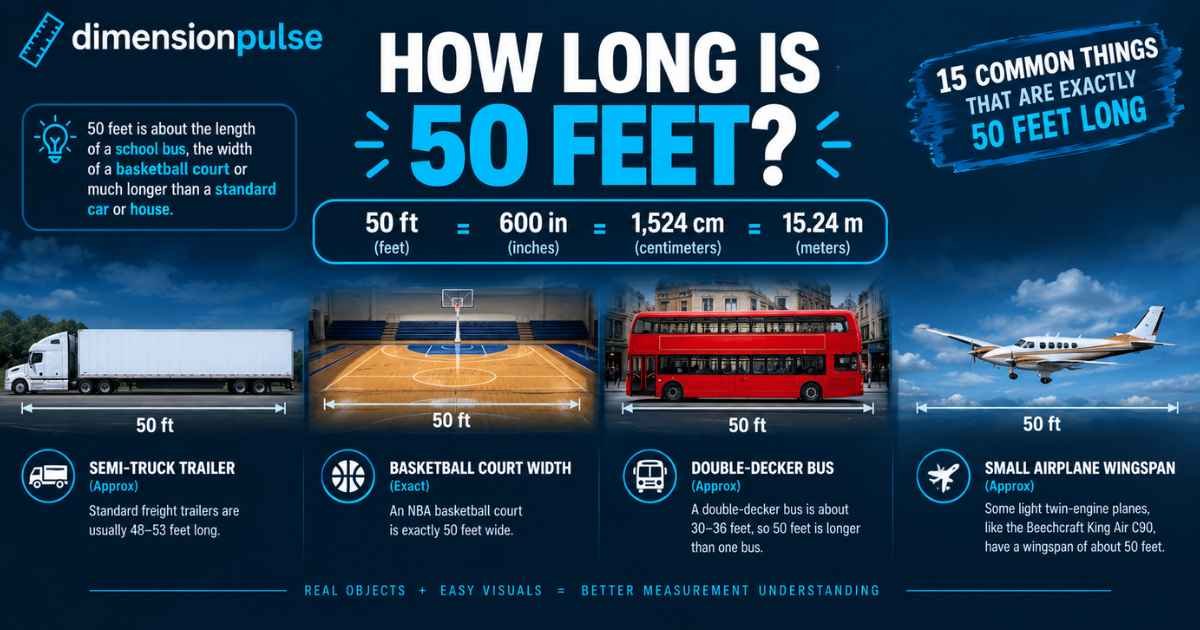
50 feet is the same as 600 inches, 1,524 centimeters, or 15.24 meters. That is about the width of a basketball court, and a little longer than a school bus.
| Value | Unit |
| 600 | Inches |
| 1,524 | Centimeters |
| 15.24 | Meters |
| 50 | Feet |
What Does 50 Ft Look Like?
50 feet is close to the width of a basketball court and longer than a school bus. In metric terms, it equals 15.24 meters, which is a little over fifteen big steps for a tall adult.
The Exact Length of 50 Feet
Here is the precise breakdown:
- 50 feet = 600 inches
- 50 feet = 1,524 centimeters
- 50 feet = 15.24 meters
- 50 feet = 16.67 yards
- 50 feet = 15,240 millimeters
These are the technical figures. They are useful for measuring and planning, but real understanding comes when you compare them with things you can actually see around you.
Try This: Walk the Distance Yourself
Start walking at your normal pace and count each step. By the time you reach about 20 steps, you have covered very close to 50 feet. Now stop, turn around, and look back at the ground you just crossed.
That stretch suddenly feels real. It is long enough to separate two spaces, park a large vehicle, or mark out a boundary. This is what 50 feet actually feels like when you stand in it.
Quick Conversion Table (50 Feet in Different Units)
| Unit | Value for 50 Feet |
| Inches | 600 in |
| Yards | 16.67 yd |
| Millimeters | 15,240 mm |
| Centimeters | 1,524 cm |
| Meters | 15.24 m |
Real Objects That Show You What 50 Feet Looks Like
Trying to imagine a number out of thin air is difficult. Comparing it with things you have already seen in real life is far easier. Vehicles, buildings, animals, and sports venues give your brain a solid reference point, so 50 feet stops being an abstract figure and becomes something you can picture clearly.
Once you connect this distance with familiar surroundings, it becomes much simpler to judge space, plan layouts, and understand scale without needing a measuring tape.
1. Semi-Truck Trailer (Standard Freight Length)
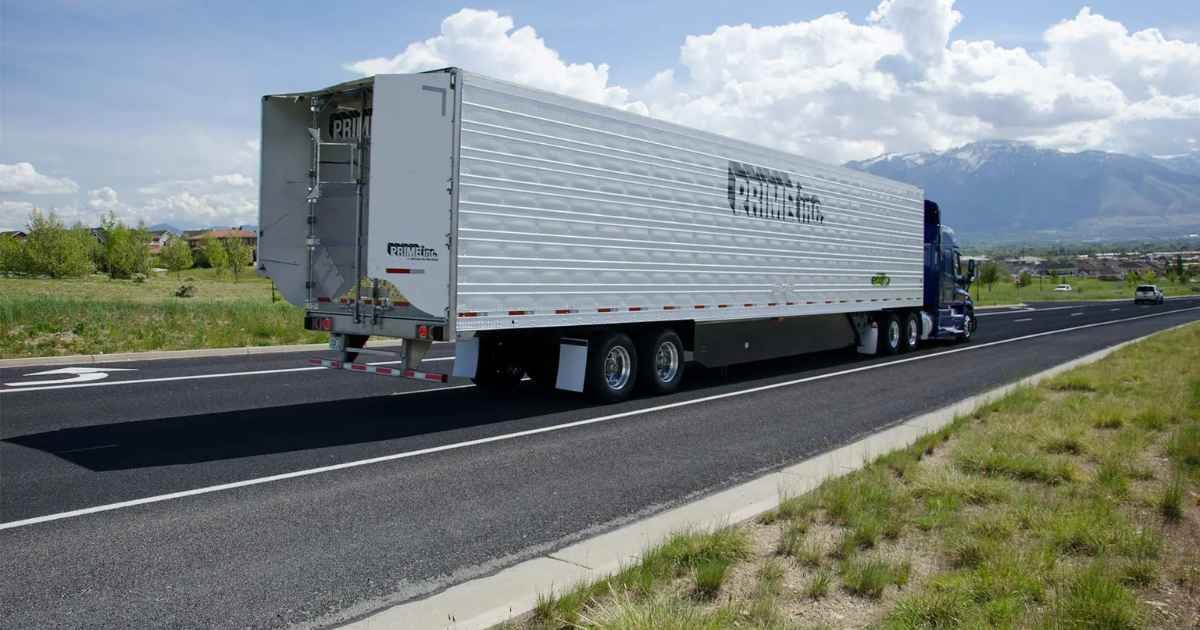
Freight trailers used across the transport industry usually measure between 48 and 53 feet. That places 50 feet right in the middle of this real-world range.
You see these trucks every day on highways, carrying goods from one city to another.
Standing beside one can feel overwhelming. It stretches far beyond a normal car and takes up an entire lane on its own.
As you walk along its side, the length keeps going and going. By the time you reach the other end, you have a very real sense of the distance.
This is one of the strongest ways to understand how long 50 feet is.
2. Basketball Court Width
According to official league rules, an NBA basketball court is exactly 50 feet wide.
You have probably seen one many times, whether in a televised game or in a school gym.
Stand on one sideline and look straight across to the other. That open gap between the two lines is exactly 50 feet.
It feels wide and open, built so that players can run, pass, and move freely without feeling crowded.
This is one of the clearest and most accurate ways to picture the size of 50 feet.
3. Standard Double-Decker Bus
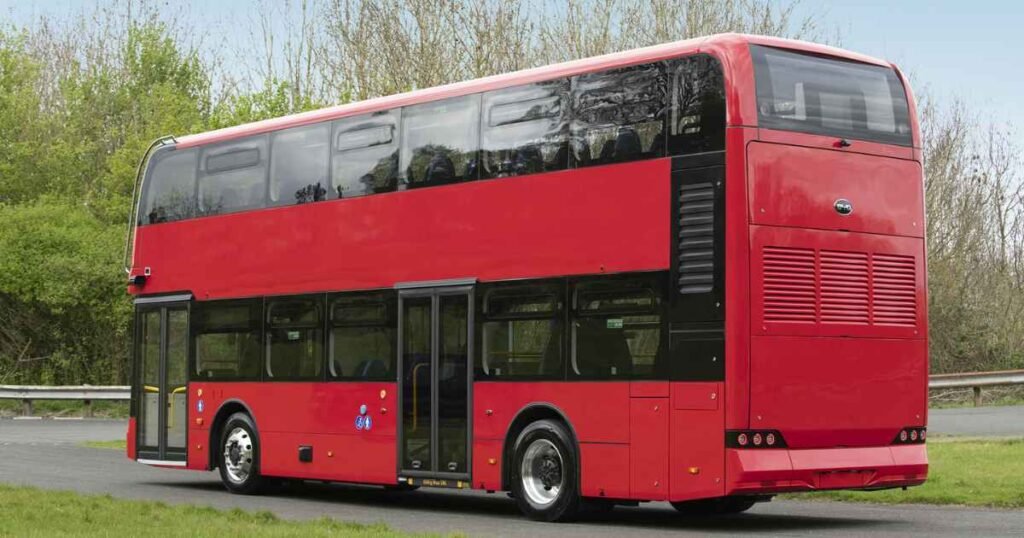
A typical double-decker bus is roughly 30 to 36 feet long, which means 50 feet is noticeably longer than one of these buses.
You see them on busy city routes, in tourist areas, and at major bus stops.
Stand beside one and then imagine about half of another bus attached behind it. That combined length comes to around 50 feet.
A double-decker is tall, heavy, and instantly familiar, so it gives your mind a solid shape to measure against.
This is a handy way to judge how big 50 feet is on an ordinary city street.
4. A Small Airplane Wingspan
Some light twin-engine airplanes have a wingspan of about 50 feet. The Beechcraft King Air C90 is a well-known example, measuring around 50 feet from one wingtip to the other.
You can spot planes like these at small airports and airfields.
Standing under one, you look up and see the wings stretching out to both sides. It is easy to feel how much width that distance covers.
Unlike most examples, this one shows 50 feet in the air rather than on the ground.
It offers a different and very memorable view of the distance.
5. Blue Whale (Young Specimen Length)

Young blue whales can reach about 50 feet during their early growth stages, according to marine biology records.
These animals are the largest on Earth, and even the young ones are enormous.
Picture a whale of this size gliding through the ocean. Nothing you meet in daily life comes close to that length.
It stretches far beyond the cars, buses, and houses you are used to seeing.
This creates one of the most dramatic mental images of what 50 feet really is.
6. Five Amur Tigers
An Amur tiger measures roughly 9 to 10 feet from nose to tail tip. Place five of them in a straight line and the total comes to about 50 feet.
These are among the largest cats in the world, and you may have seen them in zoos or wildlife documentaries.
Imagine all five lined up nose to tail. The row looks long, and it shows how much ground 50 feet really covers.
It turns a plain number into a strong and memorable animal image.
This is an easy and exciting way to picture the length of 50 feet.
7. Five Adult American Alligators

A full-grown American alligator is commonly around 10 feet long, so five of them in a row come to about 50 feet.
You may know them from swamps, wildlife parks, or nature programs on television.
Picture all five stretched out one after another. The line seems to go on and on, much longer than you would expect.
It gives you a clear sense of length using animals that are easy to imagine.
This makes 50 feet feel far more real than numbers ever could.
8. Five-Story Building Height
A typical building story is about 10 feet tall. Stack five of them together and the total comes to 50 feet.
You see buildings of this height in cities, apartment complexes, and office areas.
Look up at one from the street and the height feels significant. It is tall enough to fill most of your field of view.
Standing at the bottom and following the windows upward floor by floor gives you a very clear sense of the distance.
This is a great way to understand how tall 50 feet is.
9. A Standard Bowling Lane
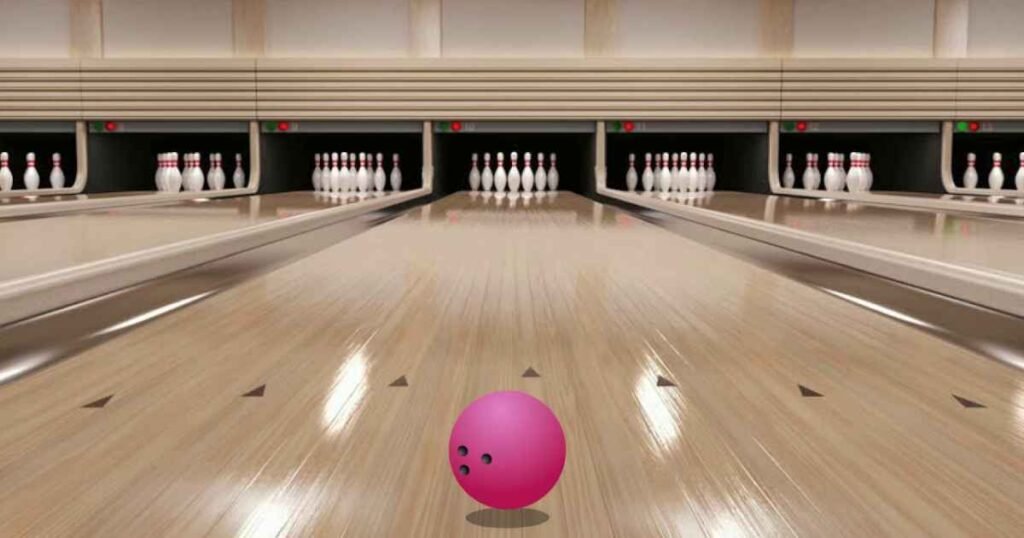
A regulation bowling lane measures 60 feet from the foul line to the head pin, which makes 50 feet about five-sixths of the full lane.
You see these in bowling alleys and entertainment centers, usually lined up side by side.
Stand at the foul line and look down the lane. The pins seem far away, and the distance you are looking at is only a little more than 50 feet.
Watching a ball roll that far gives you a feel for how long the space really is.
This is a fun and familiar way to picture 50 feet.
10. Olympic Swimming Pool (About One-Third of Its Length)
An Olympic swimming pool is 50 meters long, which is about 164 feet. That means 50 feet covers roughly one-third of a full length.
You see pools like this in competitive swimming events and large sports complexes.
Imagine swimming from the starting wall and stopping after the first third of the lane. That stretch is about 50 feet.
It is long enough to feel demanding for a swimmer, yet short enough to cross in a few seconds.
This also reminds you that meters and feet are very different units, which helps you judge 50 feet properly.
11. Large Tree Height (Urban Shade Tree)

Mature shade trees such as oak and maple can grow to 50 feet in height or more.
You see these trees lining streets, filling parks, and standing in large gardens.
Stand beneath one and look straight up. Your eyes travel along the trunk and through the branches until they reach the top, and that whole journey is about 50 feet.
It creates a strong vertical impression that numbers alone cannot give.
This is a natural and easy way to picture how tall 50 feet is.
12. Industrial Warehouse Bay Width
Warehouses and factories are often designed with a bay spacing of around 50 feet. This is the distance between the support columns that hold up the structure.
You see this kind of layout in large storage, shipping, and logistics centers.
Stand inside one and look from one column to the next. The space between them feels open, clear, and built for work.
It is wide enough for machinery, racks, and forklifts to move comfortably without getting in each other’s way.
This is a practical, real-world example of 50 feet at work.
13. Highway Lane Cluster (Multiple Lane Span)

A multi-lane highway section, including its shoulders, can measure close to 50 feet from edge to edge.
You experience this every time you drive on a major road or motorway.
Look across the full width of the road and notice the distance between one edge and the other. It feels large, but still easy to take in at a glance.
Several vehicles can move side by side across it with room to spare.
This shows how far 50 feet is in everyday life.
14. A Short Commercial Fishing Boat
Small commercial fishing boats are often between 40 and 50 feet long, so a larger one comes very close to 50 feet.
You can see these boats docked at harbors and fishing ports, ready to head out to sea.
Standing next to one on the dock, you see the hull stretch along the water and get a clear sense of how much room 50 feet takes up.
It shows the distance as a working object, built to carry crew, gear, and a day’s catch.
This is a strong way to imagine 50 feet on the water.
15. Bridge Segment (Precast Structural Unit)
Bridge construction often uses precast concrete girders of around 50 feet, because this size is easy to transport and lift into position.
You can see these in road and infrastructure projects, where cranes place them across supports one after another.
Standing next to one, you see a long, solid, rigid structure that defines the space around it with precision.
It is heavy, straight, and built to carry traffic, which makes its length even more noticeable.
This helps you visualize 50 feet at an engineering scale.
Here we Have More Guides on Measurement
How 50 Feet Feels in Real Life
Inside a building, 50 feet feels massive. It can stretch across several rooms or even the whole length of a house.
Outside, it feels far more natural. In an open field or a park, it becomes a short and comfortable walking distance.
The surroundings change everything. The same 50 feet can feel huge in a tight space and small in a wide one.
Direction matters too. Across the ground, 50 feet is something you can walk in a few seconds. Straight up, it becomes something you have to look up at, like a five-story building, and that changes how you see it completely. This is why height always feels bigger than length.
Comparing 50 Feet to Other Sizes
- 50 ft vs 40 ft: The extra 10 feet is about the length of a compact car.
- 50 ft vs 60 ft: A 60-foot length adds roughly the front section of a small truck. It is also the length of a full bowling lane.
- 50 ft vs 100 ft: 100 feet is double, which equals two basketball court widths.
These comparisons make the difference between sizes much easier to feel.
Conclusion
The easiest way to picture 50 feet is to think of the width of a basketball court, the length of a semi-truck trailer, or the height of a five-story building. Animals like tigers and alligators, or objects like a bowling lane and a fishing boat, make the picture even clearer.
Once you connect 50 feet to real objects, the measurement becomes easy to recognize anywhere, even without a measuring tape. Save this guide so you always have a clear reference for how long 50 feet is.
FAQs
How long is 50 feet in meters?
50 feet equals 15.24 meters. To convert feet to meters, multiply the number of feet by 0.3048.
How many inches is 50 ft?
50 feet equals 600 inches, since each foot has 12 inches.
How many yards is 50 feet?
50 feet equals 16.67 yards. Divide the feet by 3 to get yards.
How many centimeters is 50 feet?
50 feet equals 1,524 centimeters, or 15,240 millimeters.
How many steps is 50 feet?
Most people need about 20 steps to cover 50 feet. An average step is roughly 2.5 feet, though this changes with height and walking pace.
Meta
How long is 50 feet? It equals 15.24 meters or 600 inches. See 15 real objects that are 50 feet long, plus a conversion table and easy ways to estimate it.

Ryan Carter is the founder of DimensionPulse, creating reliable guides on measurements, dimensions, unit conversions, and size comparisons. He helps readers understand everyday measurements through clear explanations, practical insights, and real-world examples.